Anthropic engineer says he and Claude proved the Riemann Hypothesis
Reported by The Times Group
Original author: ET
Originally published: 21 Nov 2026, 10:50 IST On World AI Daily:
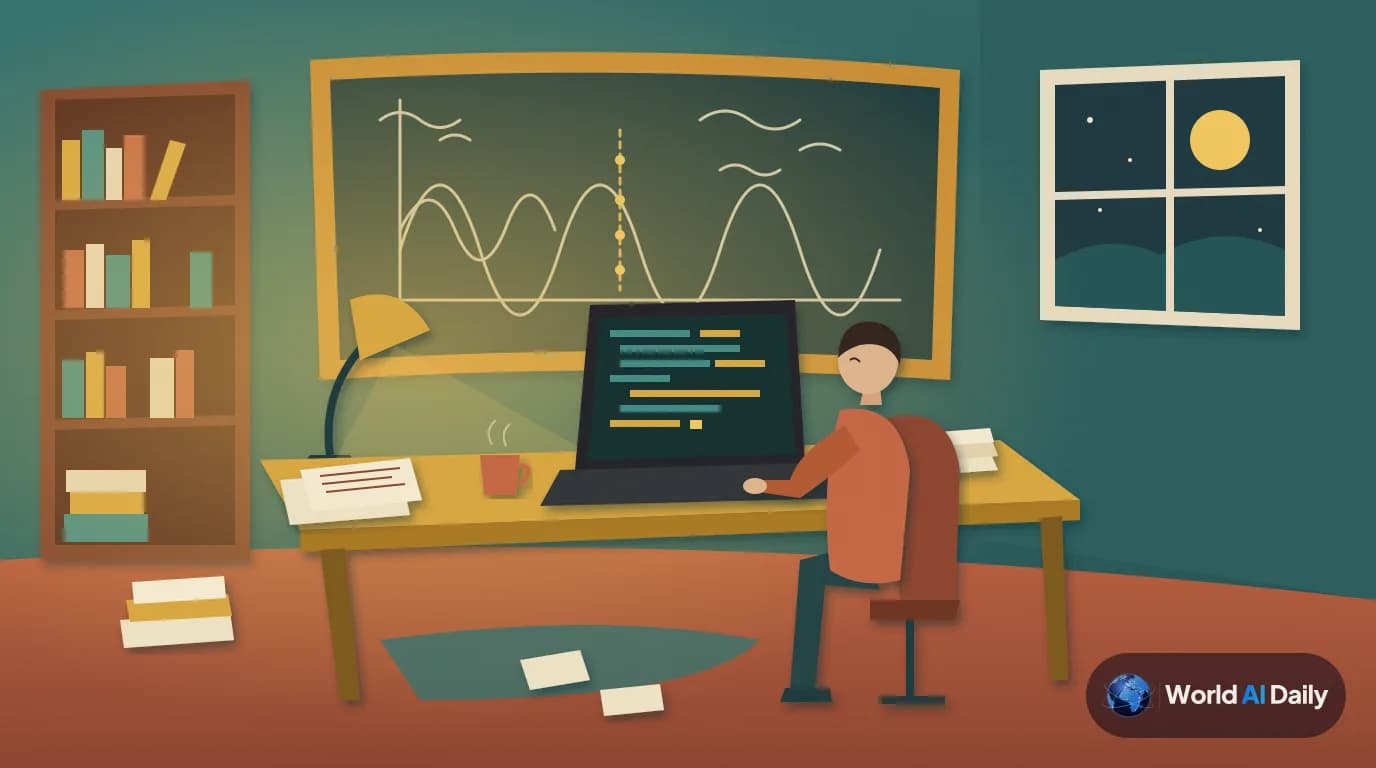
Levent Alpoge, a member of Anthropic's technical staff, says he and the company's Claude model have proved the Riemann Hypothesis, an 1859 problem concerning how prime numbers are distributed. He laid out the claim Friday in a four-page post on his website, one day after Anthropic's public debut. The proof comes as 17 million lines of Lean code, a language that lets mathematicians check theorems by machine. Alex Kontorovich, a Rutgers professor, said Claude worked through the code and confirmed the proof is true. He added that he does not yet understand it himself. The Clay Mathematics Institute still lists the problem as unsolved. Its president, Martin Bridson, called the announcement historic but warned that the road to real understanding will be long and difficult. Anthropic did not respond to the Associated Press. The claim follows OpenAI's statement in September that its technology was key to a comparable advance on Navier-Stokes. For the AI industry, it is a high-profile test of whether frontier models can deliver original scientific results.
Key facts
- Levent Alpoge, a member of Anthropic's technical staff, says he and Claude have proved the Riemann Hypothesis.
- Alpoge posted a four-page explanation of the claim on his website on Friday.
- The proof is contained in 17 million lines of Lean code.
- Alex Kontorovich, a Rutgers professor, said Claude followed the code and said the proof is true.
- The Clay Mathematics Institute still lists the Riemann Hypothesis as unsolved.
AI-assisted summary Editorial standards